
Our Lead Program
HEX17 is NorthLinks Bio’s lead intranasal antiviral program designed to prevent respiratory viral infections by blocking viral attachment at the nasal mucosa.
The program is being developed as a broad-spectrum, host-directed approach to protect against multiple respiratory viruses.
About HEX17
HEX17 is a self-administered nasal spray being developed for the prevention of respiratory viral infections.
Designed to act locally within the nasal airway, HEX17 is based on an engineered multivalent carbohydrate-binding module (mCBM) derived from carbohydrate-binding domains of Streptococcus pneumoniae sialidases.
The program is being developed as a broad-spectrum antiviral approach for respiratory pathogens including influenza viruses, RSV, rhinoviruses, coronaviruses, and other respiratory viruses.
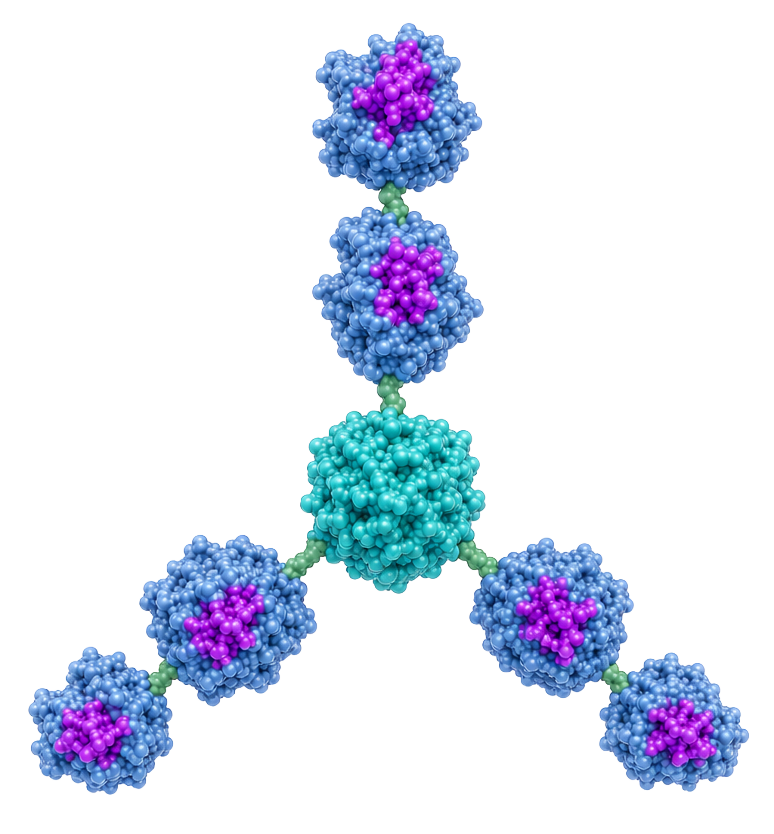
HEX17 Engineering Design
A multivalent sialic acid-binding protein engineered from carbohydrate-binding modules derived from bacterial glycosidases.
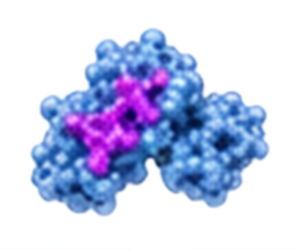
1 Single sialic acid-binding module (CBM)
Streptococcus pneumoniae neuraminidase (NanA)

2 Tandem-linked CBMs
Two CBMs linked by a short peptide

3 Fusion to trimerization domain
CBM-CBM tandem fused to the C-terminus of the trimerization domain from Psuedomonas aeruginosa sialidase
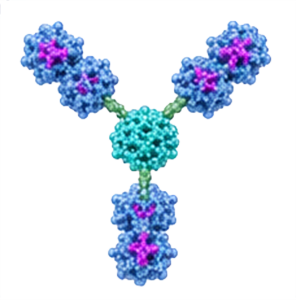
4 Self-assembly into trimer (HEX17)
Trimerization domains self-assemble into stable trimer
Investigational HEX17 Nasal Spray: Protection against multiple respiratory viruses
Mechanism of Action
HEX17 is an investigational multivalent sialic acid-binding protein engineered for enhanced glycan-binding affinity and prolonged residence on the mucosal epithelium following intranasal administration. By binding to sialic acids – ubiquitous cell-surface glycans present throughout the human respiratory tract – HEX17 has the potential to mask host receptors utilized by many respiratory viruses for cell attachment and entry.
For some enveloped viruses, including coronaviruses, HEX17 may also directly bind viral surface glycans, potentially providing an additional mechanism to inhibit infection.
This dual host- and virus-targeted approach has demonstrated broad antiviral activity against multiple respiratory viruses from diverse viral families and may eliminate susceptibility to viral escape and the need for frequent strain-specific updates associated with conventional virus-targeted approaches.
Target Indications:
Influenza A and B
Respiratory Syncytial Virus (RSV)
Coronaviruses, including SARS-CoV-2
Human rhinoviruses
Parainfluenza viruses
HEX17:
Broad-spectrum, host-directed antiviral approach
Non-invasive intranasal delivery for convenient self-administered use
Designed to maintain activity despite viral evolution Intended for periods of elevated respiratory virus circulation
Rapid-response protection against pandemic respiratory viruses
Key Differentiators
HEX17 has completed Phase 1 and Phase 2 clinical studies, including a successful influenza challenge study demonstrating reductions in symptomatic influenza infection and influenza viral load. NorthLinks Bio is advancing HEX17 toward further clinical development as a broad-spectrum intranasal antiviral prophylactic.
Development Status
The incidence of symptomatic influenza infection detected by viral culture in nasal samples in Phase 2 CHIM. In this randomized, double-blind, placebo-controlled Phase 2 CHIM study, 104 healthy adults received either placebo, a single 2.8 mg intranasal dose of HEX17, or daily 2.8 mg intranasal HEX17 for three days prior to influenza challenge. Participants were subsequently challenged with influenza A/H3N2 virus, and infection was monitored through serial nasopharyngeal swabs collected over eight days to assess symptomatic influenza infection and viral shedding. The sample size was based on the primary comparison between the placebo arm and the two HEX17 dose arms pooled together. All analyses were pre-specified.
The numbers in the bars are the % of participants in dose arm. Chi-square p values are presented, *p < 0.05, D-3 day − 3.
Key Clinical Results:
HEX17 demonstrated favorable safety and tolerability in Phase 1 and Phase 2 studies evaluating single and repeated intranasal dosing in healthy volunteers
No detectable systemic exposure was observed following intranasal administration
Phase 2 CHIM study demonstrated approximately 50% reduction in symptomatic influenza infection
HEX17 administration was associated with directional reductions in influenza viral load and reduced symptom severity following viral challenge
Key Preclinical Results
High-affinity multivalent binding to host sialic acids and viral glycans
Broad in vitro antiviral activity against influenza, RSV, HRV, PIV, and SARS-CoV-2
Significant protection in influenza, RSV, and SARS-CoV-2 animal infection models
Favorable safety profile demonstrated across preclinical studies
Get in Touch
Connect with the NorthLinks Bio team.